
Why Kitchen Ventilation Matters: Health Risks, Safety Benefits and How to Protect Your Home’s Air
Kitchen ventilation plays a critical role in protecting indoor air quality, reducing exposure to harmful cooking pollutants, controlling moisture, and lowering fire risks. A properly sized ventilation system helps remove smoke, grease, odors, carbon monoxide, and other airborne contaminants, creating a healthier and safer home environment for your family.
Many homeowners are surprised to learn that cooking can be one of the largest sources of indoor air pollution. While natural gas burns with a clean-looking blue flame, gas and propane appliances still release pollutants such as carbon monoxide, nitrogen dioxide, particulate matter, and other airborne contaminants.
A study from Stanford University found that cooking with gas can significantly increase indoor nitrogen dioxide concentrations. During routine cooking, pollutant levels can rise quickly and impact the air quality throughout the home.
According to the American Lung Association, gas cooking appliances may contribute to respiratory irritation, worsen asthma symptoms, and affect lung function, particularly among children and individuals with pre-existing respiratory conditions.
Proper kitchen ventilation helps remove these pollutants before they spread throughout the home, making it one of the most effective ways to improve indoor air quality.
Learn more about ventilation and indoor air quality in Range Hoods and IAQ: Why Ventilation Is Essential for a Healthier Kitchen.
Health Benefits of Kitchen Ventilation
Reduces Indoor Air Pollution
Cooking releases gases, grease particles, smoke, moisture, and ultrafine particles into the air. Without proper ventilation, these pollutants can accumulate indoors.
The Environmental Protection Agency (EPA) reports that indoor pollutant concentrations can be two to five times higher than outdoor levels. A high-quality range hood helps remove contaminants at their source and supports healthier indoor air.
Helps Prevent Respiratory Issues
Exposure to cooking pollutants can irritate the respiratory system and contribute to asthma flare-ups, allergies, and breathing discomfort.
Effective kitchen ventilation helps reduce exposure to airborne irritants, making the home more comfortable for individuals with asthma, allergies, or other respiratory conditions.
Controls Moisture and Humidity
Boiling, simmering, and steaming release significant amounts of moisture into the air. Excess humidity can contribute to mold growth, mildew formation, and damage to cabinetry and finishes.
Ventilation systems help remove excess moisture, reducing the risk of mold-related health concerns and protecting kitchen surfaces.
Learn more about cooking pollutants in the Kitchen Air Quality Guide: Pollutants, Health Risks and How Ventilation Protects You.
Safety Benefits of Kitchen Ventilation
Reduces Fire Hazards
Cooking produces grease particles that can settle on cabinets, walls, countertops, and surrounding surfaces. Over time, grease buildup becomes a fire hazard.
The National Fire Protection Association (NFPA) identifies cooking as the leading cause of home fires and fire-related injuries. Ventilation systems help capture grease particles before they accumulate throughout the kitchen.
Helps Prevent Carbon Monoxide Accumulation
Carbon monoxide is a colorless, odorless gas produced by fuel-burning appliances, including gas stoves.
The Centers for Disease Control and Prevention (CDC) reports hundreds of accidental carbon monoxide-related deaths each year. Proper kitchen ventilation helps expel combustion byproducts and reduce the risk of dangerous indoor buildup.
Types of Kitchen Ventilation Systems
Kitchen ventilation systems generally fall into three categories: ducted range hoods, exhaust fans, and ductless range hoods. The right option depends on your cooking habits, kitchen layout, and installation requirements.
| Ventilation Type | How It Works | Best For |
|---|---|---|
| Ducted Range Hood | Exhausts pollutants outdoors through ductwork | Maximum ventilation performance |
| Exhaust Fan | Removes stale air through wall or ceiling vents | Supplemental ventilation |
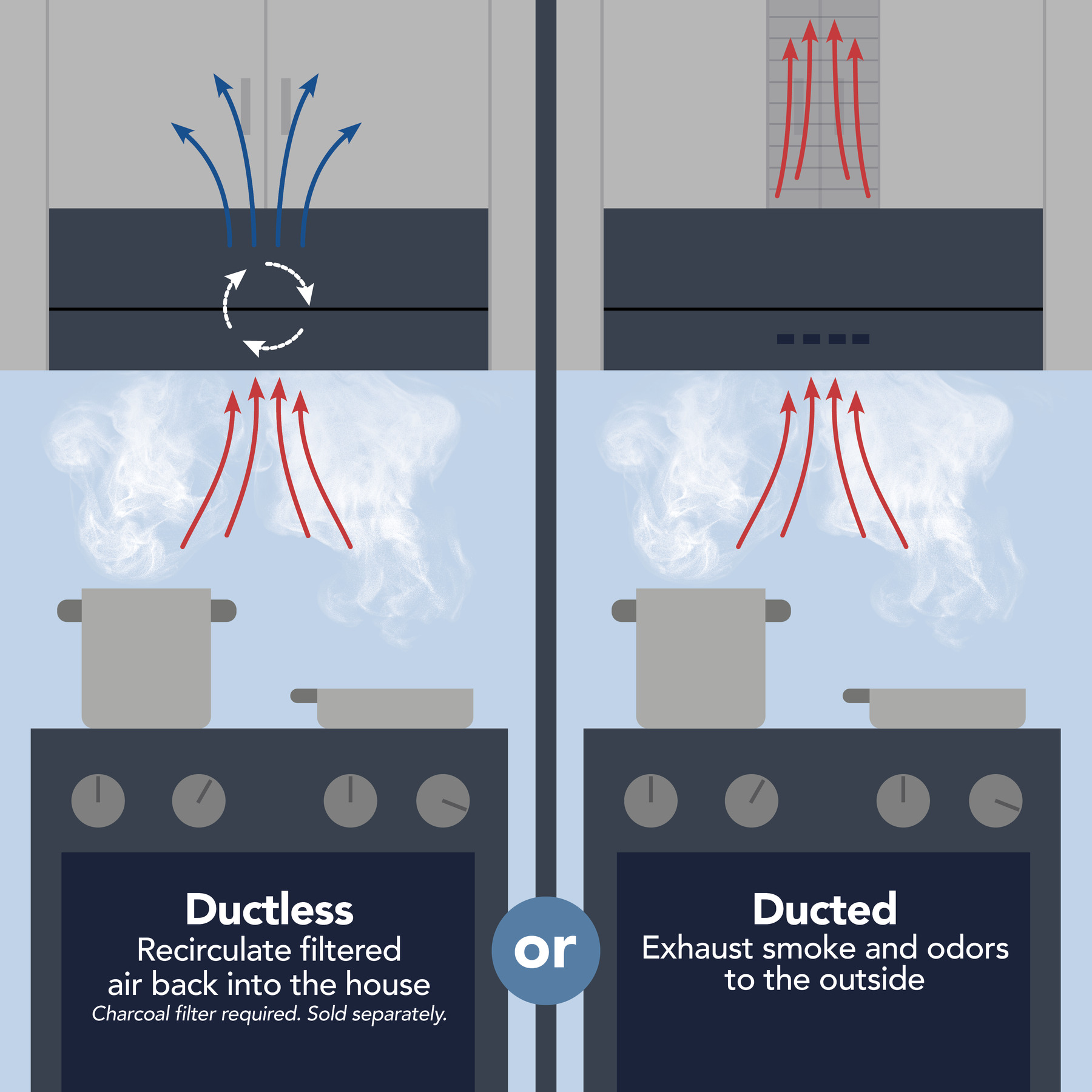
| Ductless Range Hood | Filters and recirculates air back into the kitchen | Homes without exterior duct access |
Ducted Range Hoods
Ducted range hoods are widely considered the most effective kitchen ventilation solution. They capture smoke, grease, moisture, odors, and pollutants before exhausting them outdoors.
Available styles include wall-mounted, under-cabinet, insert, and island configurations, making them suitable for nearly any kitchen design.
Ductless Range Hoods
Ductless range hoods use charcoal and grease filters to capture contaminants before recirculating air back into the room.
While easier to install, they generally do not remove pollutants as effectively as ducted systems and require routine filter maintenance to maintain performance.
Exhaust Fans
Wall-mounted and ceiling-mounted exhaust fans can provide additional ventilation, especially in smaller kitchens or situations where a full range hood installation is not feasible.
They work best as a supplement to dedicated kitchen ventilation rather than a complete replacement for a range hood.
Upgrade Your Kitchen Ventilation with Broan-NuTone
Choosing the right ventilation system can significantly improve indoor air quality, comfort, and kitchen safety.
Improved Air Quality and Ventilation Performance
Broan-NuTone range hoods use powerful blower systems designed to remove smoke, moisture, odors, and airborne pollutants efficiently.
Easy Installation Options
Many models feature the EZ1 installation system, allowing for faster and more convenient installation during remodeling projects or kitchen upgrades.
Advanced Safety and Convenience Features
Many Broan-NuTone range hoods include advanced technologies such as:
- Heat Sentry™ automatic heat detection
- SmartSense™ automatic blower adjustment
- LED lighting systems
- Multiple ventilation speeds
- Energy-efficient operation
These features help maintain optimal ventilation while improving convenience and overall kitchen comfort.
Conclusion
Kitchen ventilation is about far more than removing cooking odors. A properly designed ventilation system helps protect your family from airborne pollutants, controls moisture, reduces fire risks, and supports healthier indoor air quality.
Whether you choose a ducted range hood, ductless system, or supplemental exhaust fan, investing in effective kitchen ventilation is one of the most impactful improvements you can make for your home's health and safety.
Explore available solutions on the Broan-NuTone website and discover which ventilation system best fits your kitchen and cooking style.
Need help choosing the right option? Read Which Range Hood Matches Your Cooking Style? Find Your Perfect Ventilation Type.
Frequently Asked Questions
Why is kitchen ventilation important?
Kitchen ventilation removes smoke, grease, moisture, odors, and harmful pollutants generated during cooking, helping maintain healthier indoor air quality.
Can cooking affect indoor air quality?
Yes. Cooking releases gases, ultrafine particles, grease, moisture, and combustion byproducts that can accumulate indoors without proper ventilation.
What pollutants are commonly released during cooking?
Common pollutants include nitrogen dioxide, carbon monoxide, particulate matter, grease particles, volatile organic compounds, and moisture.
Are ducted range hoods better than ductless range hoods?
Ducted range hoods generally provide superior ventilation because they exhaust pollutants outdoors rather than recirculating filtered air back into the kitchen.
Can kitchen ventilation help reduce mold growth?
Yes. Ventilation removes excess moisture produced during cooking, helping control humidity levels and reduce the likelihood of mold and mildew growth.
How often should range hood filters be cleaned?
Metal grease filters should typically be cleaned every one to three months depending on cooking frequency, while charcoal filters should be replaced according to manufacturer recommendations.
Does ventilation help reduce fire risks?
Yes. Effective ventilation captures grease particles before they accumulate on surfaces, helping reduce one of the common contributors to kitchen fire hazards.