
Range Hood Filter Maintenance: How to Know When It's Time
Most range hood filter problems can be prevented with regular maintenance. If your kitchen smells linger, airflow feels weaker, grease is visible on the filter, or your range hood becomes noisy, it may be time to clean or replace the filter. Charcoal filters typically require replacement every 3–6 months, while aluminum and baffle filters should be cleaned monthly to maintain proper ventilation performance.
Range hood filters play a critical role in kitchen ventilation by capturing grease, smoke, cooking particles, and odors before they spread throughout your home. Regular filter maintenance helps improve indoor air quality, protects kitchen surfaces from grease buildup, and allows your range hood to operate efficiently.
Knowing when to clean or replace a range hood filter is essential for maintaining ventilation performance and extending the life of your range hood system.
Learn more about the connection between ventilation and healthier indoor air here: Range Hoods and IAQ: Why Ventilation Is Essential for a Healthier Kitchen
Why a Clean Range Hood Filter Matters
A clean filter allows your range hood to remove airborne contaminants effectively. As grease and debris accumulate, airflow becomes restricted and ventilation performance declines.
Poor Indoor Air Quality
When filters become clogged, smoke, cooking odors, moisture, and grease particles can remain in the kitchen air longer than intended. This can reduce comfort and contribute to poorer indoor air quality.
Reduced Ventilation Efficiency
A blocked filter forces the blower motor to work harder to move air through the system. This can increase energy consumption and place additional strain on range hood components.
Increased Fire Risk
Grease buildup inside a filter can become a fire hazard if maintenance is neglected. Regular cleaning and replacement help reduce this risk.
Different Types of Range Hood Filters
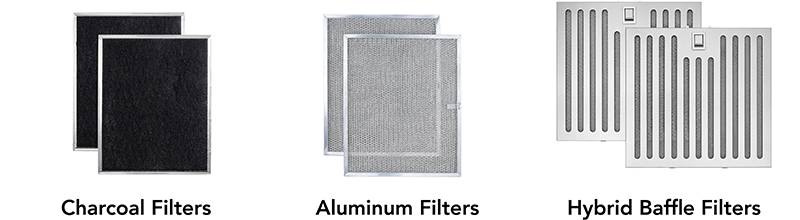
Not all range hood filters operate the same way. Understanding your filter type helps determine the correct maintenance schedule.
.png)
Charcoal Filters
Charcoal filters are commonly used in ductless range hoods. They use activated carbon to absorb odors and airborne contaminants before recirculating air back into the kitchen.
Because charcoal filters absorb pollutants, they cannot be washed or reused. They must be replaced periodically.
- Used in ductless range hoods
- Not washable
- Typically replaced every 3–6 months
- May last longer in light-use kitchens
Learn more about ducted and ductless systems here: Kitchen Ventilation Buying Guide: How to Choose the Right Range Hood for Your Home
Aluminum Filters
Aluminum mesh filters are commonly found in ducted range hoods. Their primary purpose is to capture grease particles before air is exhausted outdoors.
- Washable and reusable
- Should be cleaned regularly
- Help maintain airflow and efficiency
- May eventually require replacement after extended use
Baffle Filters
Baffle filters are frequently used in professional-style and high-performance residential range hoods. They use a series of metal channels to separate grease from airflow.
- Durable stainless steel construction
- Excellent grease capture performance
- Easy to clean
- Can last for many years with proper maintenance
Signs It Is Time to Change Your Range Hood Filter
Several warning signs indicate your filter may need cleaning or replacement.
Smoke and Odors Remain in the Kitchen
If cooking smells or smoke linger long after meal preparation, your filter may no longer be effectively capturing airborne contaminants.
Visible Grease Buildup
A filter coated with grease, grime, or sticky residue is often operating below peak efficiency. Heavy buildup can also increase fire risk.
Unusual Noises or Vibration
A clogged filter restricts airflow and can force the blower motor to work harder. This may result in increased noise, vibration, or reduced performance.
Persistent Kitchen Odors
A properly functioning range hood should help remove cooking odors efficiently. Lingering smells may indicate that a charcoal filter is saturated or a grease filter requires cleaning.
Learn more about airflow performance here: Airflow 101: How Range Hood Power and CFM Are Measured
How Cooking Habits Affect Filter Lifespan
The frequency and type of cooking you do can significantly impact filter maintenance requirements.
Frequent Frying and High-Heat Cooking
Cooking methods that generate grease, smoke, and airborne particles will cause filters to become saturated more quickly.
Light or Occasional Cooking
Households that cook less frequently may experience slower filter buildup, but regular inspections are still recommended.
| Cooking Style | Filter Impact | Maintenance Needs |
|---|---|---|
| Frequent frying | High grease accumulation | More frequent cleaning and replacement |
| Daily cooking | Moderate buildup | Monthly inspections recommended |
| Occasional cooking | Lower buildup | Less frequent maintenance but regular checks advised |
Recommended Filter Replacement Frequency
While manufacturer recommendations should always take priority, the following guidelines apply to most residential range hoods.
| Filter Type | Maintenance Recommendation | Replacement Timeline |
|---|---|---|
| Charcoal Filter | Replace when saturated | Every 3–6 months |
| Aluminum Mesh Filter | Clean monthly | Typically around 1 year if needed |
| Baffle Filter | Clean monthly | Can last several years |
How to Inspect Your Range Hood Filter
Perform a quick inspection every month to identify maintenance needs early.
- Turn off the range hood and allow it to cool.
- Locate the filter beneath the hood.
- Remove the filter according to the manufacturer's instructions.
- Inspect for grease buildup, dirt, or visible damage.
- Hold the filter up to a light source.
- If light struggles to pass through the filter, cleaning or replacement may be necessary.
How to Replace a Range Hood Filter
- Verify the correct replacement filter for your range hood model.
- Turn off and unplug the unit.
- Remove the existing filter.
- Clean the surrounding filter compartment.
- Install the new filter securely.
- Confirm all clips, tabs, or fasteners are properly attached.
Tips for Choosing the Right Replacement Filter
- Check your range hood model number before ordering.
- Verify whether your system uses charcoal, aluminum, or baffle filters.
- Use manufacturer-approved replacement parts whenever possible.
- Review the owner's manual for maintenance recommendations.
Finding the correct replacement filter helps maintain airflow, efficiency, and safety. Browse shop.broan-nutone.com for replacement filters, range hoods, and maintenance resources designed to keep your kitchen properly ventilated.
Continue reading here: Range Hood Filter Guide: How to Clean, Replace and Improve Your Kitchen Air
Frequently Asked Questions
How often should I replace a charcoal range hood filter?
Most charcoal filters should be replaced every 3–6 months, depending on cooking frequency and manufacturer recommendations.
Can aluminum range hood filters be cleaned instead of replaced?
Yes. Aluminum mesh filters are washable and should typically be cleaned monthly to maintain airflow and grease capture performance.
How do I know if my range hood filter is clogged?
Common signs include lingering cooking odors, visible grease buildup, reduced airflow, smoke remaining in the kitchen, and increased range hood noise.
Do baffle filters need replacement?
Baffle filters are highly durable and can often last for many years when cleaned regularly and maintained properly.
Can a dirty filter reduce range hood performance?
Yes. A clogged filter restricts airflow, reduces pollutant capture efficiency, and can force the blower motor to work harder.
What happens if I never replace a charcoal filter?
A saturated charcoal filter loses its ability to absorb odors and airborne contaminants, reducing the effectiveness of the ventilation system.
How often should I inspect my range hood filter?
A monthly inspection is recommended for most households, especially if you cook frequently or use high-heat cooking methods.