
Where Should You Place Your Microwave? Better Layouts for Kitchen Air Quality
The best place for a microwave is usually away from the cooktop so a dedicated range hood can properly ventilate the kitchen. Popular alternatives include built-in cabinetry, microwave drawers, wall oven combinations, shelves, and kitchen islands. These layouts preserve convenience while allowing better removal of smoke, grease, moisture, and cooking pollutants.
Why Microwave Placement Matters for Indoor Air Quality
Microwaves are found in nearly 90% of kitchens because they provide fast, convenient food preparation. However, as homeowners become more aware of indoor air quality, many are reconsidering the common over-the-range microwave setup.
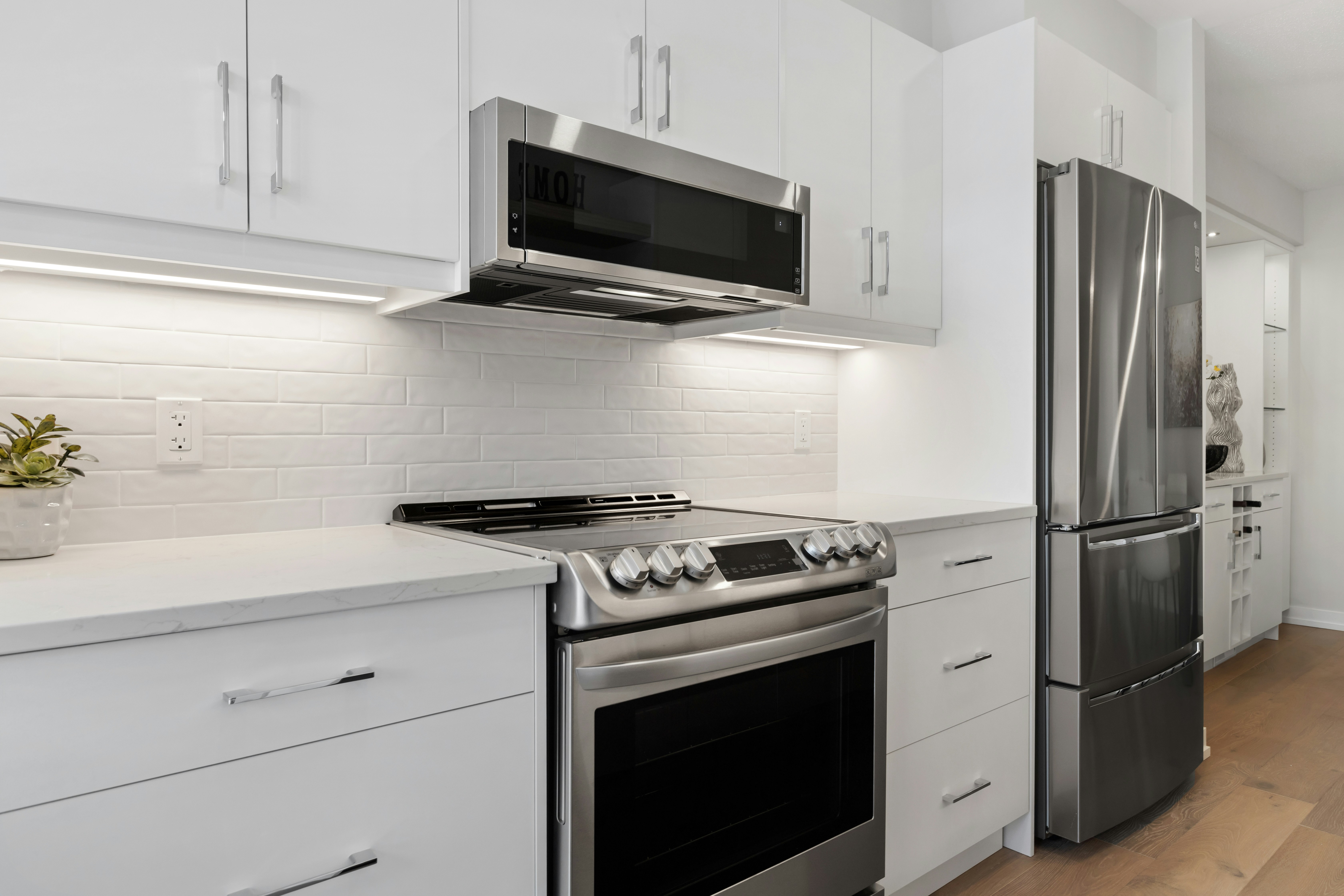
Over-the-range microwaves are often selected to save space, but they can limit kitchen ventilation performance. Although many include a built-in fan, they are generally not designed to capture and remove cooking pollutants as effectively as a dedicated range hood.
During cooking, kitchens can generate:
- Smoke
- Grease particles
- Excess moisture
- Odors
- Combustion byproducts from gas cooking
A properly sized range hood is designed to capture these pollutants at the source and move them out of the kitchen. When a microwave occupies the space above the range, homeowners may sacrifice ventilation performance for convenience.
Learn more here: Range Hood vs Over-the-Range Microwave: Why Proper Ventilation Matters
Six Better Places to Put a Microwave
1. Build the Microwave into Cabinetry
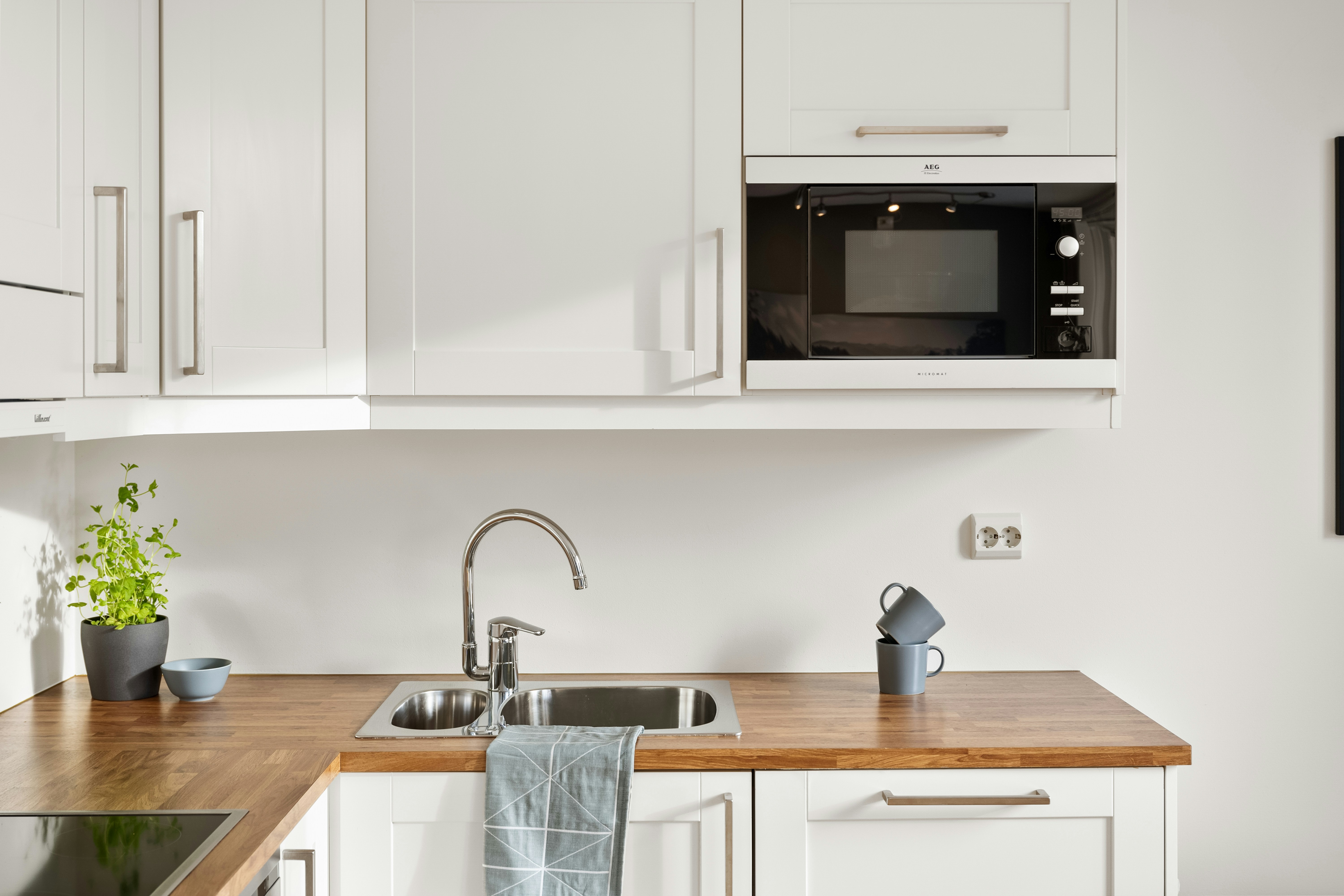
A built-in microwave creates a clean, custom appearance while freeing up valuable countertop space. Countertop microwave models can often be installed within a dedicated cabinet opening or shelf using trim kits and minimal remodeling.
Benefits include:
- More usable countertop space
- Cleaner visual appearance
- Keeps the microwave away from the cooking zone
- Often achievable without major renovation work
2. Install a Microwave Drawer
Microwave drawers are commonly installed beneath countertops or within kitchen islands. Because they open upward from the top, users can access hot dishes more comfortably without lifting them overhead.
Advantages include:
- Modern, streamlined appearance
- Improved accessibility
- Child-friendly operation
- Ideal for aging-in-place kitchen designs
- Preserves space above the range for a ventilation hood
3. Pair the Microwave with a Wall Oven
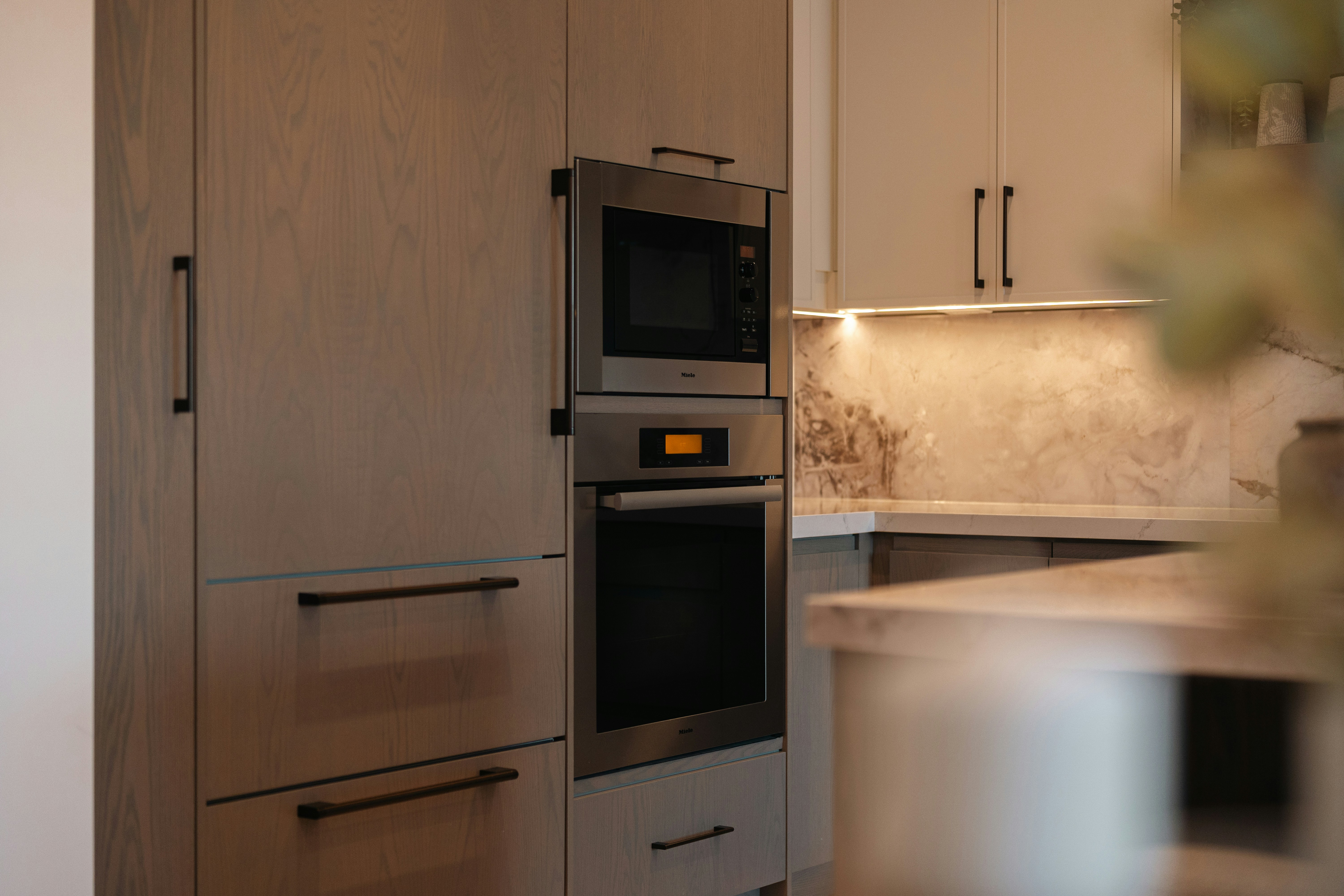
Installing a microwave above a wall oven creates a cohesive appliance center and keeps the cooking surface available for a dedicated range hood.
This approach works particularly well in larger kitchens and can be achieved using:
- Combination microwave-wall oven units
- Separate appliances connected with a trim kit
- Tall cabinet appliance towers
The result is a comfortable working height and a streamlined appearance.
4. Place the Microwave on a Dedicated Shelf
A properly sized shelf can provide an affordable and flexible microwave location without major remodeling.
When choosing this option, ensure:
- The shelf is securely mounted
- The shelf can support the microwave's weight
- Required ventilation clearances are maintained
- The microwave remains easy to access
This solution keeps the appliance functional without interfering with kitchen ventilation design.
5. Build the Microwave into a Kitchen Island
Installing a microwave within a kitchen island keeps it accessible while reducing visual clutter. It also helps maximize island functionality and frees wall space for storage or ventilation equipment.
Benefits include:
- Improved kitchen workflow
- More flexible cabinet layouts
- Cleaner visual design
- Dedicated space above the cooktop for an effective range hood
6. Eliminate the Microwave Entirely
Some homeowners choose not to include a microwave at all. As interest in home cooking grows, alternative appliances are becoming more common.
Potential alternatives include:
- Steam ovens
- Warming drawers
- Induction cooktops
- Convection ovens
For households that rarely use a microwave, eliminating it can create additional storage and design flexibility while simplifying kitchen ventilation planning.
Microwave Placement Comparison
| Location | Space Savings | Accessibility | Supports Dedicated Range Hood |
|---|---|---|---|
| Built-In Cabinetry | High | High | Yes |
| Microwave Drawer | High | Very High | Yes |
| Wall Oven Combination | Medium | High | Yes |
| Dedicated Shelf | Medium | High | Yes |
| Kitchen Island | High | High | Yes |
| No Microwave | Maximum | N/A | Yes |
Making the Right Choice for Your Kitchen
Choosing where to place a microwave affects more than appearance. It can directly influence kitchen ventilation effectiveness and indoor air quality.
Moving the microwave away from the cooktop creates space for a dedicated range hood that can better remove heat, grease, moisture, odors, and airborne cooking contaminants. For many homeowners, this approach provides the best balance between convenience, functionality, and healthier indoor air.
Learn more about selecting the right ventilation system here: Key Considerations When Choosing a Range Hood for Your Kitchen
Continue reading here: Why Kitchen Ventilation Matters: Health Risks, Safety Benefits and Proper IAQ
Frequently Asked Questions
Is an over-the-range microwave a good substitute for a range hood?
No. While many over-the-range microwaves include ventilation fans, they typically do not provide the same pollutant capture performance as a dedicated range hood.
What is the best location for a microwave if indoor air quality is a priority?
Placing the microwave away from the cooktop allows a dedicated range hood to be installed above the cooking surface, improving ventilation performance.
Are microwave drawers worth considering?
Microwave drawers offer excellent accessibility, a clean appearance, and help preserve valuable wall space for ventilation and cabinetry.
Can a microwave be installed inside a cabinet?
Yes. Many countertop microwaves can be integrated into cabinetry using approved trim kits and adequate ventilation clearances.
Does microwave placement affect kitchen design flexibility?
Yes. Relocating the microwave often creates more options for storage, appliance placement, and range hood installation.
What appliances can replace a microwave?
Common alternatives include steam ovens, warming drawers, convection ovens, and induction cooking systems.
Why is kitchen ventilation important?
Proper ventilation helps remove smoke, grease, moisture, odors, and airborne pollutants that can accumulate during cooking.