
Why Energy Recovery Ventilators (ERVs) Are Essential for Airtight Homes
Energy Recovery Ventilators (ERVs) are essential in airtight homes because they provide balanced, continuous ventilation while improving indoor air quality and energy efficiency. By exchanging stale indoor air with fresh outdoor air, ERVs help control humidity, reduce indoor air pollutants, and prevent issues like mold and condensation in modern airtight homes.
Why Do Airtight Homes Need Better Ventilation?
Modern homes are built to be more airtight than ever, improving energy efficiency but reducing natural airflow. This creates the need for controlled, mechanical ventilation.
Over the past several decades, homes have become significantly tighter. Improved air sealing, better insulation, along with higher-performance windows and doors have all helped reduce heating and cooling loads. This leads to lower energy bills and improved comfort. However, as homes become more energy efficient, they also require a more intentional and effective approach to ventilation to maintain a healthy indoor environment.
What Problems Do Airtight Homes Create for Indoor Air Quality?
A tightly sealed home can trap pollutants indoors, leading to indoor air quality (IAQ) issues if ventilation is not properly managed.
Without adequate airflow, common indoor pollutants can build up, including:
- Excess moisture
- Carbon dioxide
- Particulates
- Cooking byproducts
- Cleaning chemicals
- Off-gassing from building materials
This buildup can lead to poor indoor air quality, increasing exposure to moisture, mold growth, allergens, and airborne pollutants that may trigger respiratory issues, headaches, and fatigue. Unlike older homes, which relied on natural air leaks for ventilation, modern airtight homes trap these contaminants inside—making a dedicated ventilation strategy essential for maintaining a healthy living environment.
Are Traditional Ventilation Systems Enough for Airtight Homes?
Traditional ventilation methods help, but they do not fully address whole-home air exchange in tightly sealed construction.
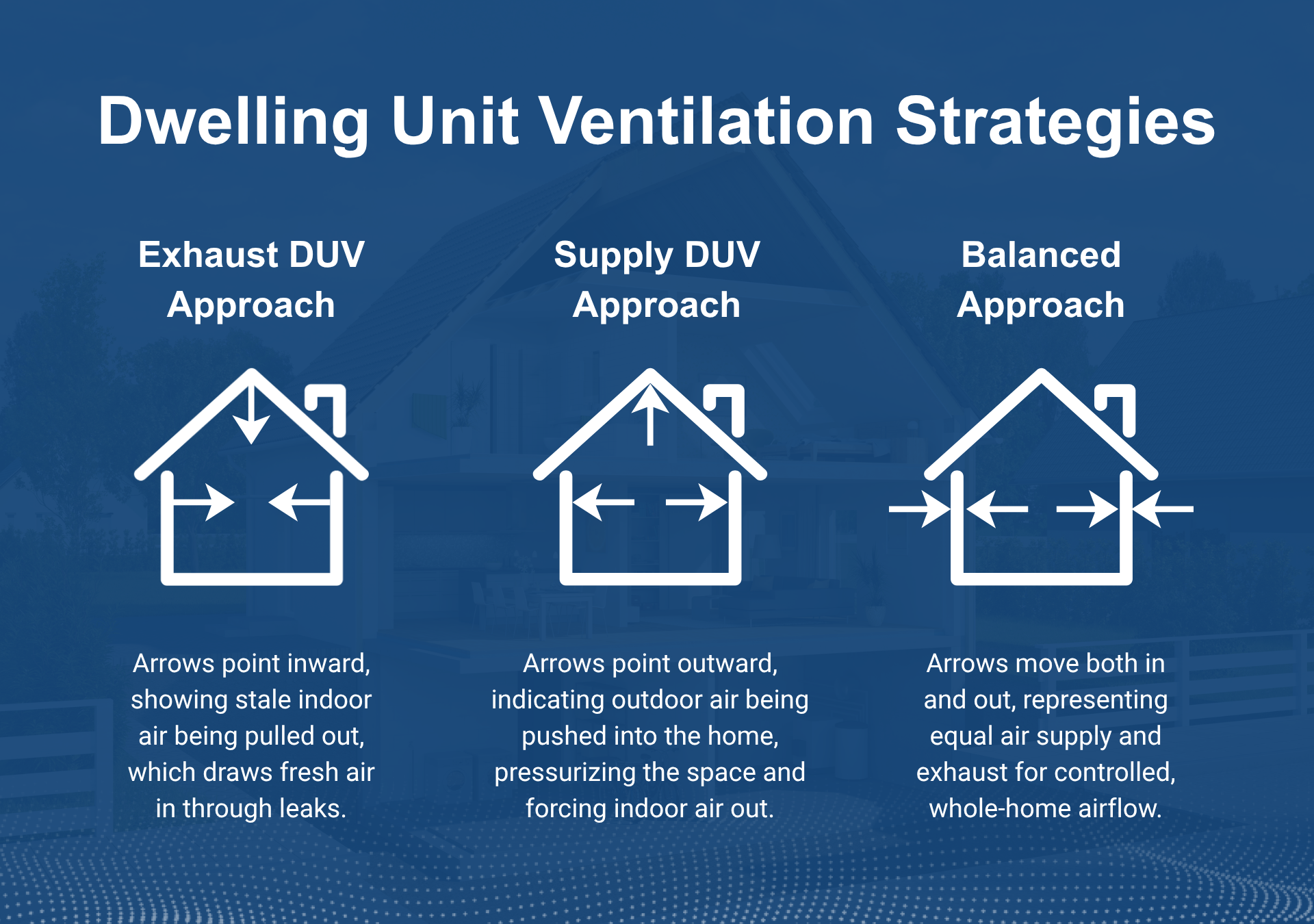
Local exhaust systems—like bathroom fans and kitchen ventilation—are still essential for removing moisture and pollutants at the source. However, building codes increasingly require dwelling unit ventilation (DUV) to ensure continuous airflow throughout the entire home.
Common ventilation approaches include:
Exhaust-Only Ventilation
These systems use a fan (often a bathroom fan) to pull air out of the home, creating negative pressure. Fresh air enters through unintentional leaks in the building envelope.
Limitations:
- Relies on leakage that may not exist in airtight homes
- Can draw air from undesirable areas (garages, attics, crawlspaces)
Supply-Only Ventilation
These systems push outdoor air into the home, slightly pressurizing it and forcing indoor air out through leaks.
Limitations:
- Relies on leakage that may exist in tight homes
- Can create uneven airflow
Why Are Energy Recovery Ventilators the Best Solution for Airtight Homes?
ERVs provide balanced ventilation that does not rely on air leakage, making them ideal for airtight construction.
An Energy Recovery Ventilator (ERV) simultaneously:
- Exhausts stale indoor air
- Supplies fresh outdoor air
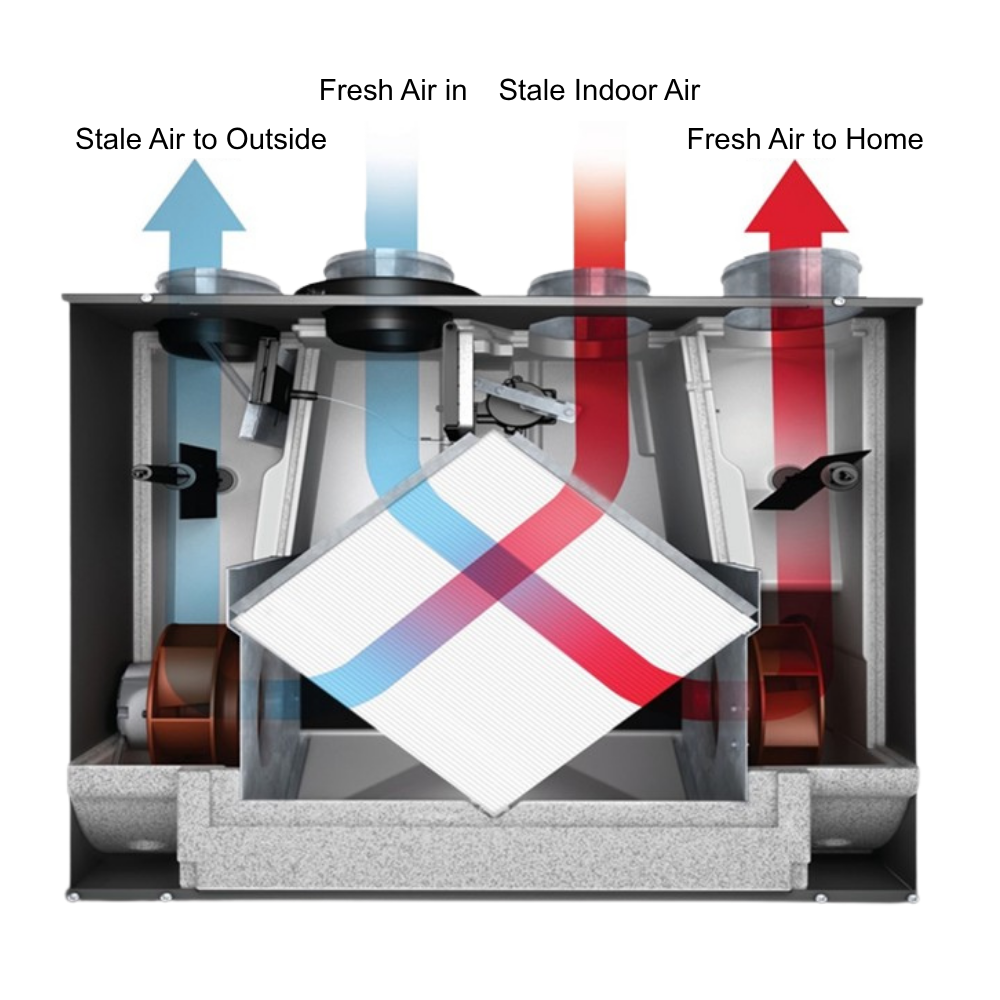
Because both airflows are mechanically controlled, ERVs ensure consistent, balanced and predictable ventilation throughout the home.
How Do Energy Recovery Ventilators Improve Energy Efficiency and Comfort in Every Season?
ERVs recover energy from outgoing air to reduce heating and cooling losses, making them more efficient than traditional systems.
Inside an ERV, heat and moisture are transferred between incoming and outgoing air streams without mixing the air itself.
Seasonal benefits of ERVs:
- Winter: Warms incoming cold air using outgoing heated air
- Summer: Reduces heat and humidity in incoming air
This process helps:
- Lower heating and cooling costs
- Reduce strain on HVAC systems
- Maintain consistent indoor temperatures and humidity levels
When Should You Choose an ERV Over Other Ventilation Options?
ERVs are best suited for modern, airtight homes where controlled ventilation and energy efficiency are priorities.
Best for:
- New construction or tightly sealed homes
- Homes focused on energy efficiency
- Climates with significant heating or cooling/dehumidifying demands
- Homeowners prioritizing indoor air quality
Compared to exhaust-only and supply-only:
- Much more energy efficient
- Do not rely on building leaks for air passage
What Are the Key Benefits of ERVs?
ERVs offer a combination of performance, comfort, and efficiency advantages.
Key benefits include:
- Continuous, balanced ventilation
- Improved indoor air quality
- Better humidity control
- Reduced risk of mold and condensation
- Lower energy costs compared to traditional ventilation
- Consistent comfort in all seasons
The Bottom Line: Why Energy Recovery Ventilators Are Essential for Modern Homes
As homes continue to become more energy efficient and airtight, ventilation must evolve to match. ERVs provide a reliable, efficient solution that ensures fresh air without sacrificing comfort or energy performance.
By combining balanced airflow with energy recovery, ERVs help modern homes maintain healthy indoor environments while meeting today’s building standards and homeowner expectations.