
How Cleaning Products Affect Indoor Air Quality
Many household cleaning products release volatile organic compounds (VOCs), fragrance chemicals, aerosols, and other airborne contaminants that can temporarily reduce indoor air quality. Using cleaning products as directed, choosing lower-emission products when possible, controlling sources of indoor pollution, and ventilating your home during and after cleaning can significantly reduce your exposure.
Updated: June 2026
Cleaning keeps your home healthier by removing dirt, germs, allergens, and residues from surfaces. But some cleaning routines can also add pollutants to the air, especially when products are sprayed, heavily fragranced, mixed incorrectly, or used in rooms with limited ventilation.
The U.S. Environmental Protection Agency (EPA) reports that studies have found levels of several organic pollutants average two to five times higher indoors than outdoors. During and for several hours after certain activities, indoor levels can rise much higher.
Why Cleaning Products Can Affect Indoor Air Quality
Cleaning your home is essential for reducing germs, allergens, and dirt, but some cleaning products can introduce new pollutants into the air. Air fresheners, disinfectant sprays, bleach-based cleaners, aerosol products, and products with strong fragrances may release volatile organic compounds (VOCs), fine particles, or other airborne chemicals as they are used and as surfaces dry.
VOCs are chemicals that easily evaporate into the air at room temperature. Common VOCs found in some cleaning products can include formaldehyde, ethanol, glycol ethers, terpenes, solvents, and fragrance compounds. According to the EPA, VOCs are emitted as gases from certain solids or liquids and can include chemicals that may have short- and long-term health effects.
Aerosol sprays can also contribute to fine particulate matter, including PM2.5. These tiny particles can remain suspended in the air and may be inhaled more deeply into the lungs than larger particles.
The Centers for Disease Control and Prevention (CDC) recommends using bleach and other disinfectants according to the manufacturer’s directions and warns never to mix household bleach or disinfectants with other cleaners or disinfectants because dangerous vapors can be released.
What the Research Says
Researchers have found that many common cleaning products emit a complex mixture of airborne chemicals. These findings do not mean you should stop cleaning. Instead, they highlight the importance of choosing appropriate products, using them as directed, and ventilating your home while cleaning.
- Indoor VOC concentrations can be two to five times higher than outdoor levels. The EPA reports that studies have found levels of several organic pollutants average two to five times higher indoors than outdoors, and concentrations can increase substantially during and immediately after activities such as cleaning, painting and using aerosol products.
- Fragranced cleaning products can emit dozens of volatile organic compounds (VOCs). Research by Anne Steinemann found that many fragranced cleaning products release numerous VOCs, including compounds classified as hazardous air pollutants, even when those ingredients are not fully disclosed on product labels.
- Cleaning activities can generate ultrafine particles indoors. Research published in Environmental Science & Technology found that common cleaning products containing fragrances can react with ozone to rapidly form ultrafine particles, increasing indoor particle concentrations during routine cleaning.
- Long-term occupational exposure to cleaning sprays has been associated with faster declines in lung function. A large prospective study published in the European Respiratory Journal found that frequent exposure to cleaning sprays over many years was associated with accelerated decline in lung function among professional cleaners and others who cleaned regularly.
Taken together, these studies reinforce a simple message: cleaning remains essential for a healthy home, but using products responsibly and providing adequate ventilation can help reduce unnecessary exposure to airborne chemicals.
Possible Health Effects of Poor Ventilation During Cleaning
The health effects depend on the type of product, the amount used, the person’s sensitivity, and how well the space is ventilated.
The EPA notes that exposure to VOCs can contribute to symptoms such as eye, nose, and throat irritation, headaches, loss of coordination, nausea, and possible damage to the liver, kidneys, or central nervous system depending on the chemical and exposure level.
- Eye, nose, and throat irritation
- Headaches
- Dizziness
- Nausea
- Skin irritation
- Temporary worsening of asthma or other respiratory conditions in sensitive individuals
Highly fragranced products may continue releasing chemicals long after the surface appears dry, which is one reason that a strong "clean" scent is not always a sign of healthier indoor air.
How to Reduce Exposure While Cleaning
You do not have to eliminate every cleaning product. The most effective first step is source control: reducing or removing the pollutant source before trying to dilute or filter it after the fact. The EPA identifies source control as one of the most effective ways to improve indoor air quality. Learn more in EPA guidance on improving indoor air quality.
- Open windows whenever weather and outdoor air quality permit.
- Follow product directions and never use more than recommended.
- Avoid mixing cleaning chemicals, particularly bleach with ammonia, acids, vinegar, or other disinfectants.
- Choose low-VOC, low-odor, or fragrance-free products when practical.
- Use pump sprays or wipes instead of aerosols when they are suitable for the task.
- Store chemicals in tightly sealed containers away from living spaces.
- Allow cleaned rooms to air out before spending extended periods in them.
HVAC systems equipped with appropriately selected higher-MERV filters may also help capture more airborne particles, although filters should always be compatible with the HVAC system. A filter that is too restrictive may reduce airflow or affect system performance.
Ventilate While You Clean
Use Your Bathroom Exhaust Fan
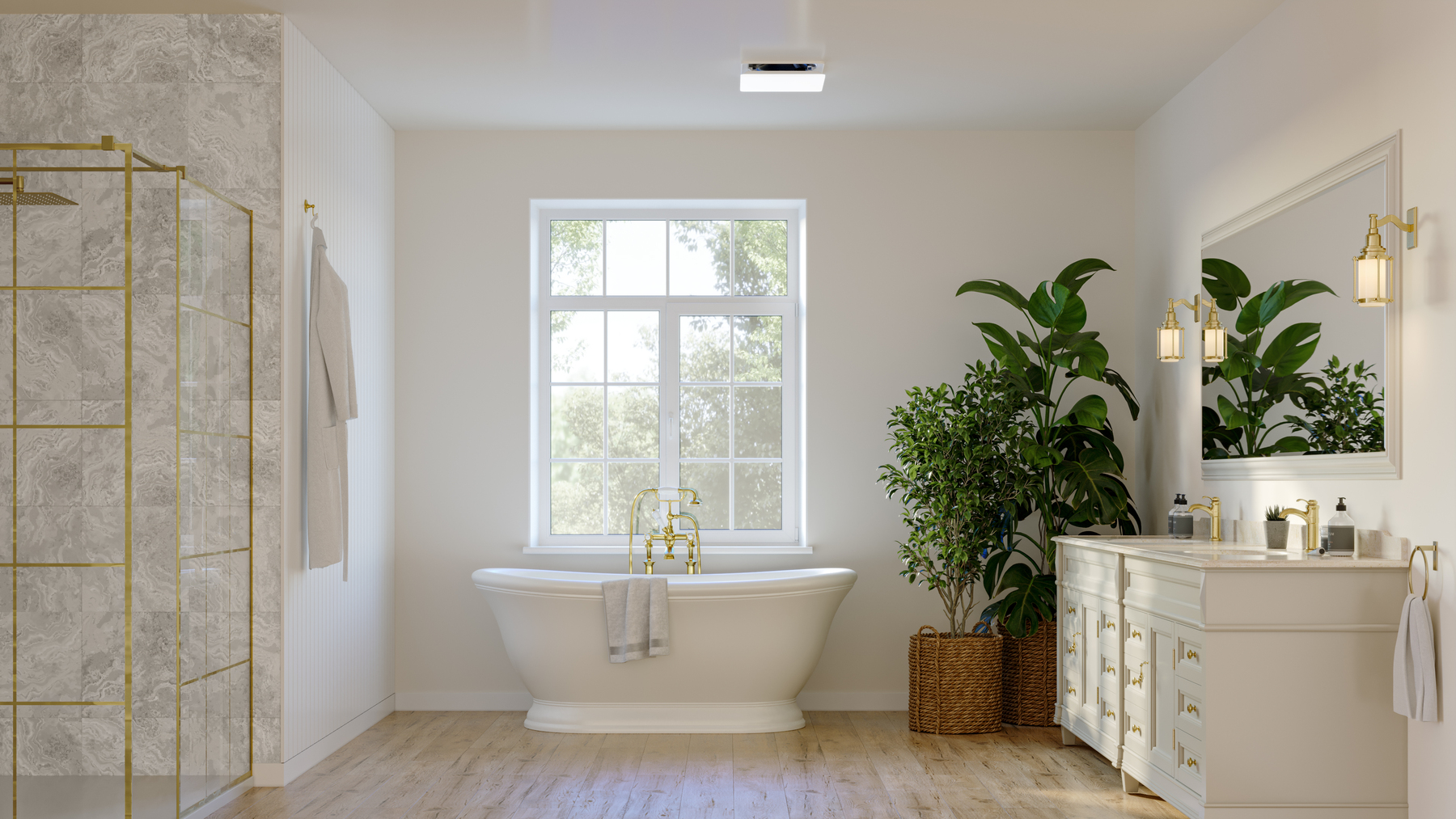
If you are cleaning your bathroom with disinfectants, bleach, or other strong cleaners, turn on your bathroom exhaust fan before you begin. Leave it running for at least 20 minutes after you are finished, or longer if odors or moisture remain. A properly vented exhaust fan helps remove moisture, odors, and airborne chemicals from the room.
Bring Fresh Air Into Your Home
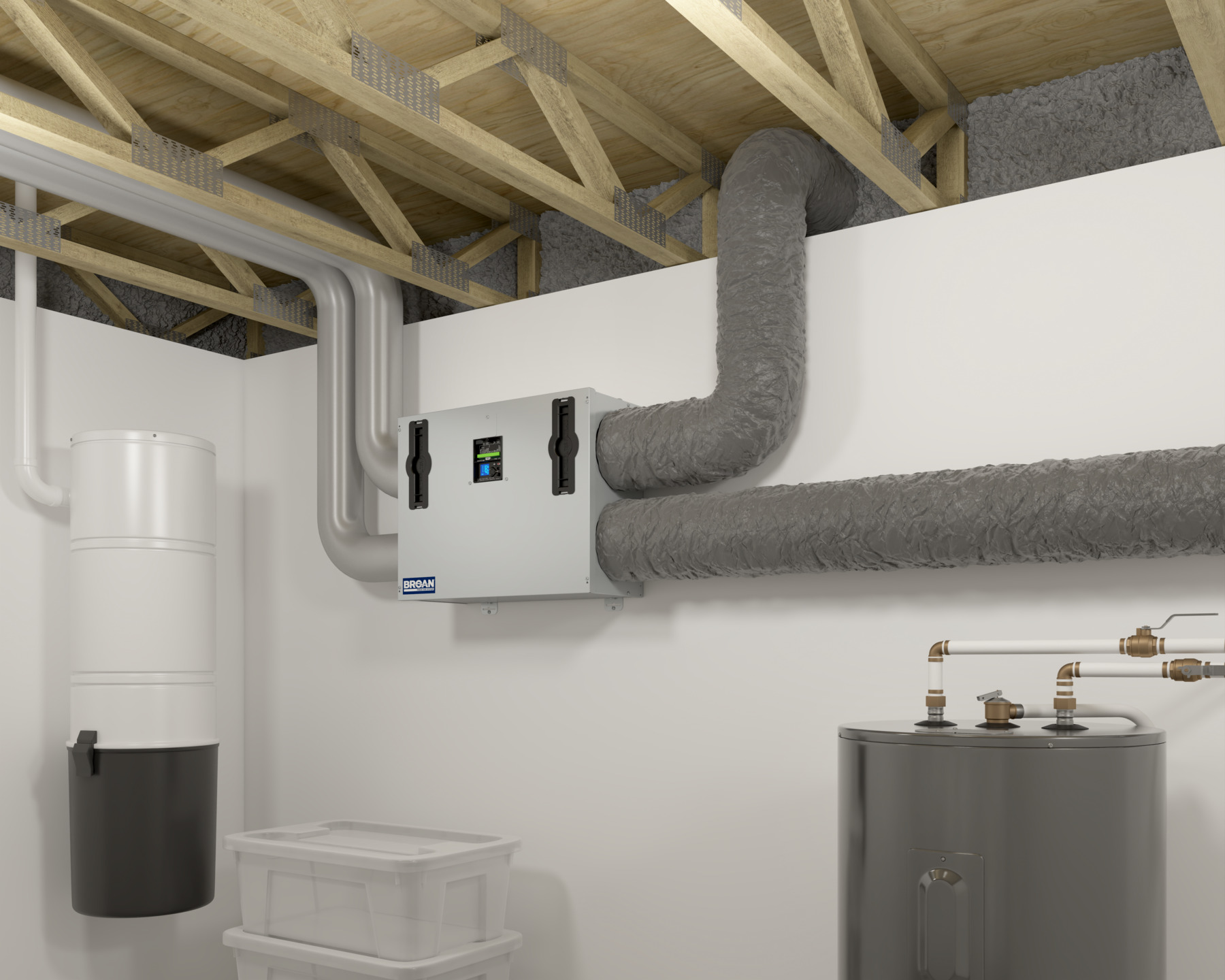
Modern homes are built to be more energy efficient, which also means they exchange less outdoor air naturally. Whole-home fresh air ventilation systems, including HRVs and ERVs, can continuously introduce filtered outdoor air while exhausting stale indoor air, helping dilute airborne contaminants generated by everyday activities such as cooking and cleaning.
Learn more about whole-home fresh air ventilation systems, or read our related guide: How Ventilation Helps Reduce Airborne Contaminants Indoors.
Do Not Forget the Kitchen Range Hood
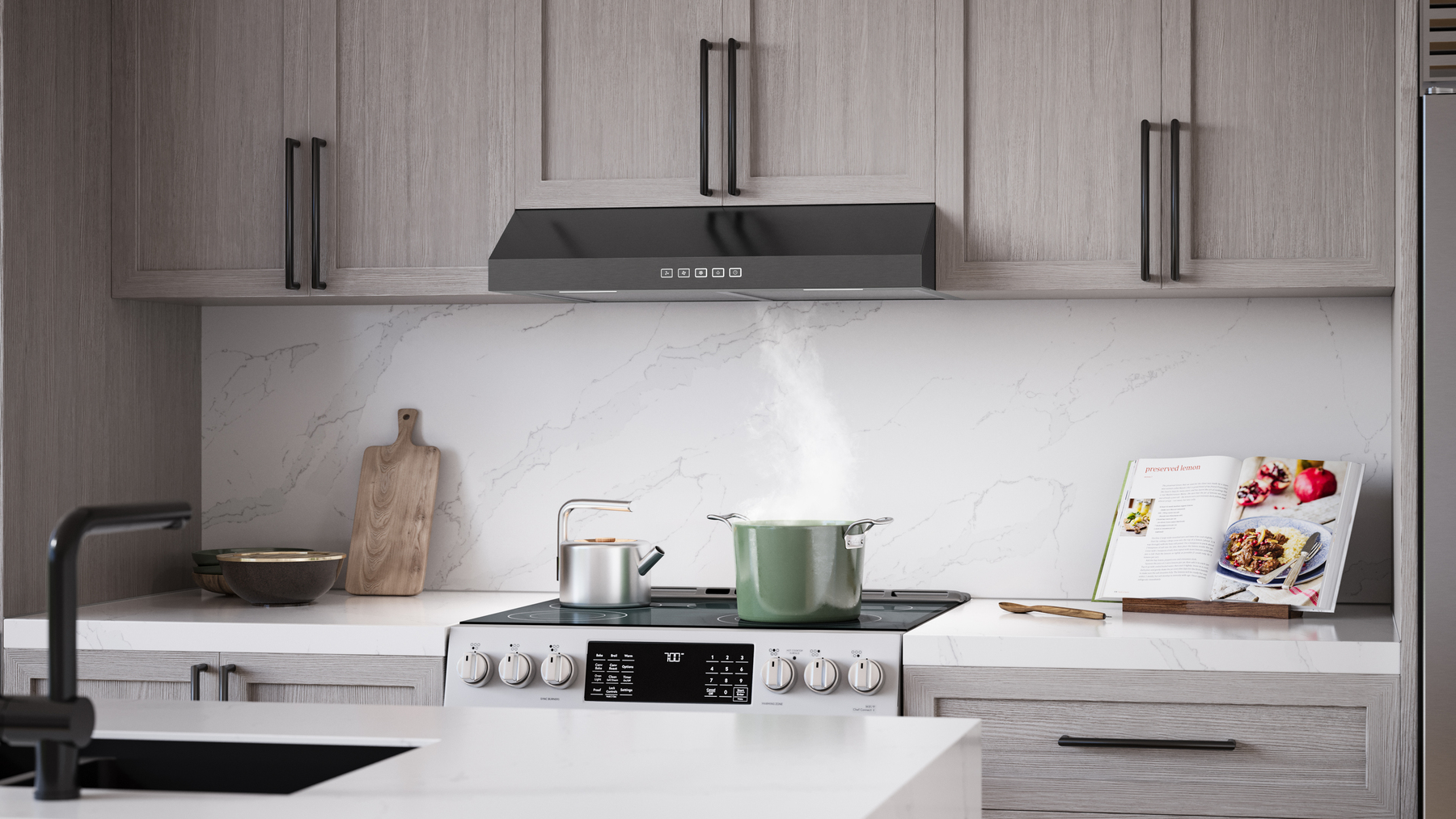
If you are cleaning around the cooktop, operating a range hood that vents outdoors can help exhaust airborne vapors generated during cleaning before they spread throughout the home. Turn it on before cleaning and let it run for at least 20 minutes afterward, or longer if odors remain.
For more information, read Range Hoods and IAQ: Why Ventilation Is Essential for a Healthier Kitchen.
Frequently Asked Questions
Do all cleaning products release VOCs?
No. Many products emit very low levels, while others are specifically formulated as low-VOC or fragrance-free. Aerosol sprays and heavily fragranced products generally produce higher airborne emissions.
Is the smell of a cleaner harmful?
Not necessarily. A strong scent usually indicates that chemicals are present in the air, but odor alone does not determine whether a product is hazardous. Some odorless chemicals can also affect indoor air quality.
Should I open windows while cleaning?
Yes, when outdoor conditions permit. Opening windows can help dilute and remove airborne chemicals released during cleaning. Avoid opening windows when outdoor air quality is poor, during high pollen days if allergies are a concern, or when outdoor humidity would make moisture problems worse.
Should I run my bathroom fan while cleaning?
Yes. Running an exhaust fan during and after cleaning helps remove moisture, odors, and airborne chemicals, improving indoor air quality.
How long should I ventilate after cleaning?
When possible, continue ventilating the room for at least 15 to 20 minutes after cleaning, or longer if strong odors remain.
Are natural cleaning products always safer for indoor air?
Not always. Some products made with natural ingredients, including citrus oils and essential oils, also emit VOCs. Reading labels and providing adequate ventilation remain important regardless of the product type.